Iran's Education Minister set up a committee to eliminate kings from textbooks. That's a lot of kings! Iran's history goes back thousands of years! Would the Minister like to pretend it only goes back to 1979?The ancient Iranian king, Soroush (Cyrus), wrote the first human rights document. Now the Education Minister wants to delete him altogether? http://www.iranian.com/main/2010/apr/removing-kings-history
The Texas School Board is considering removing Thomas Jefferson from the list of Enlightenment thinkers. Jefferson was a strong proponent of the separation of church and state, in addition to drafting the American Declaration of Independence! This is only one of many changes being considered. The vote on changes is in May. http://english.aljazeera.net/news/americas/2010/04/20104933515560979.html
These proposed removals surely recall the character in George Orwell's book, 1984, whose job was to constantly remove anything and anyone from books and media that did not support propaganda currently put forth by Big Brother. Will the book, 1984, itself is removed someday? --Julie Jigsawnovich
Tehrani friends tell me that when the economy started going bad in Iran, Ahmadinejad distracted the populace from his mismanagement by launching a "moral" crackdown on "problem" youngsters--including young women wearing bright colors. And the Shock propaganda TV shows were used to divert attention from government failings by scapegoating rappers, as Erfan Paydar pointed out in an article posted to this website. http://www.iranian.com/main/2008/what-truth
The Islamic Republic is now "re-educating" youths, redoubling efforts to instill/and reinforce Islamic ideas via a media "soft war," as reported in the New York Times. http://www.nytimes.com/2009/11/24/world/middleeast/24iran.html?_r=1http://
But if the IRI is at all sophisticated, surely they realize that some Iranians will never show real enthusiasm for Islam. Now the IRI may also try to capture the attention and imagination of Zoroastrians and Iranians who love Persian history--try to get these people on their side.
I recently read the manuscript of a new book by a young Iranian who rewrote history to make Jews seem like the enemies of ancient Persians, even though they actually, historically got along well. The book was written within a mythological, game-like genre which may have the additional usefulness of especially appealing to military and basij-age males.
If the IRI succeeds in scapegoating and isolating Iranian Jews within the fantasy realm, they may have built on groundwork laid by the earlier Holocaust Cartoon exhibition in Tehran.
And if international sanctions do not successfully target Sepah/Revolutionary Guards, but instead mostly impact the populace of Iran, then an economic atmosphere may be created where propaganda scapegoating Jews inside Iran--because it's convenient--could be more readily accepted than it could be otherwise. This would violate the very spirit of Koroush/Cyrus the Great--and the greatness of heart of the Iranian people. Jews remember Cyrus for freeing them and allowing them to practice their religion. Iran is currently home to the largest population of Jews in the Middle East, outside of Israel.
Present day Iran seeks to bolster their defense against attack. Iran is being presented with an ideology of absolute submission to the will of the Supreme Leader--and religion is being used to sell this supposed utopia. 1930's Germany was afraid of being attacked. Germany was presented with an ideology of supposed racial purity and strength--and religion was used to sell this supposed utopia. The irony is that if the IRI passes special laws against Jews and persecutes them in a way even remotely resembling what happened under the Third Reich, then the IRI will strengthen Zionism exponentially.
Addendum: Fellow Iranium.com blogger, Faryarm, pointed out in their comment on this article that the regime already persecutes Bahais.
NEW YORK–Going to Iran, seeing the presidential campaign, and transitioning from being a tourist into being a supporter of the rights of Iranian voters was an evolution in knowledge and feelings.
I was upset when the Taliban blew up the giant Buddhas in Afghanistan--I’m not religious, but I’m an artist and I care about history. Then, the US military invaded Iraq, and their national museum was looted. I thought, “What could happen next? Israel has been threatening to bomb Iran for a while. Which places and things of artistic and historical importance could be at risk?”
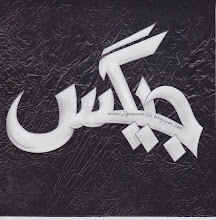
Photos of extremely beautiful Iranian mosques and palaces beckoned on Flickr. “Cyrus created the first human rights document,” announced a caption to a photo of his tomb on Flickr. I stumbled upon Hichkas’ “Bunch of Soldiers” music video on Youtube–and feared triggering a Dept. of Homeland Security file, so scary and nationalistic it was on first viewing. But after finding a version with English subtitles, I realized that Hichkas’ lyrics showed insight and compassion, and he was advocating strength in defense–not adventurism. The music drew me in with a compelling combination of rap and traditional Iranian instruments. The shots of Azadi Tower were stunning. Tehran seemed so exciting–I had to see it in person!
Fear crept back onto me when further internet searches uncovered videos of Iranian women being arrested for revealing too much hair, prison guards whipping inmates, and executions by stoning. I realized there were internal and external dangers, but I still wanted to visit Iran.
After warily reading the Iranian Constitution and penal code, I persuaded my best friend to vacation in the Islamic Republic with me. I mentioned the upcoming Presidential election, and suggested that the run-up to it could be an exciting time to visit. And it was! In Iran, we were thrilled to see supporters joyfully and openly handing out presidential campaign literature. We took photos of Mousavi, Karroubi, and Ahmadinejad election banners in Tehran, Shiraz, and Esfehan. Mousavi supporters repeatedly showed tremendous enthusiasm–and we even heard kind words for our own president, Barack Hussein Obama. His Norooz greeting had been well-received.
Although I was keenly aware of Sharia law, and felt an underlaying angst in Iran–at the same time I met such kind and charming people there and saw so much beauty, that I experienced unexpected culture shock upon returning home to New York City. I missed being around Iranians, and wondered where I could find some. I found them on the internet, and they showed me a side of Iran I hadn’t seen as a tourist, or even as a YouTube viewer. On June 13th, the day after the presidential election, someone told me that Sepah had staged a coup d’etat in Iran. Having no idea what Sepah was, I struggled to comprehend the complicated system of Iranian politics, militias, religion, and civil rights. Within a week of the election, I attended a rally at Manhattan’s Union Square in support of voters in Iran.
I brought a Mousavi poster with me. An Iranian journalism student asked to photograph me posing with the poster–from the front, with my full face showing. I declined with the sinking feeling that such a photograph could cause real problems for me if I ever returned to Iran.
President Obama hasn’t specified a significant difference between Mousavi and Ahmadinejad regarding the nuclear issue. I felt certain there were considerable differences on other issues, however. Mousavi had set a precedent by campaigning with his wife, and he received strong support from women seeking more freedom. Hardliner Ahmadinejad cracked down on women during his first Presidential term, and he was closely aligned with the Basij.
Astonishing graphic documentation of injuries, wounds, and murder flooded the internet. Horrifying and upsetting, the videos were also morally compelling and intimately human. People tried to rescue and treat the fallen, they cried, they screamed, putting their bloody hands in the air--seeking witnesses to the violence.
Next came thousands of arrests, documented prison torture and rape, and script-like “confessions” at Revolutionary Court show trials. In the midst of this I attended Iranian rallies, hunger strikes, teach-ins, panel discussions, and art exhibitions. Before the election, people in the Islamic Republic of Iran were full of energy, life, and hope. Many Iranians there, here in New York, and all over the world, still are. So, I resist reconciling memories of my wonderful vacation in Iran with the raw severity of the crackdown going on there now! I believe that cruelty carries the seeds of its own destruction. And I tremendously admire the brave Iranians who, undaunted, and in their own ways, support democracy, freedom of speech, and human rights.

 These proposed removals surely recall the character in George Orwell's book, 1984, whose job was to constantly remove anything and anyone from books and media that did not support propaganda currently put forth by Big Brother. Will the book, 1984, itself is removed someday? --Julie Jigsawnovich
![Reblog this post [with Zemanta]](http://img.zemanta.com/reblog_e.png?x-id=4c3abf39-c0dc-45e8-9358-0425a300a04f)


![Reblog this post [with Zemanta]](http://img.zemanta.com/reblog_e.png?x-id=4f8e0c8f-355d-4cc9-8b1b-e3ee161b8eb9)


 Posts
Posts